This trigger mode is designed for high-compression engines paired with weak starter motors, where cranking speed drops noticeably on each compression stroke. Instead of comparing only the previous tooth (which the regular Missing tooth does) to the current tooth when detecting the missing gap, this mode calculates the detection threshold using the average of the tooth before and the tooth after the missing gap. This two-sided averaging produces a threshold that is far more representative of the actual local tooth timing, making the missing gap detection robust even when individual tooth durations vary widely due to compression loading.
Note: This is not the only solution to the problems caused by high compression engines, but it is another tool in the toolbox.
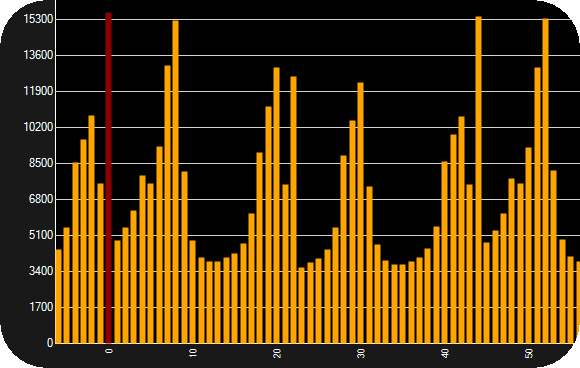
Trigger logger showing a high-compression engine with a weak starter motor. The significant variation in tooth pulse widths - particularly the tall spikes near compression stroke, causes the missing tooth gap to become indistinguishable from normal compression-induced slowdowns, making reliable trigger detection unreliable with the standard missing tooth algorithm.
Regular Missingtooth vs Missingtooth, high compression trigger system
The standard Missing tooth trigger determines the missing gap threshold based solely on the previous tooth duration, which makes it vulnerable to compression-induced slowdowns causing false or missed detections. The new High Compression mode instead averages the tooth before and the tooth after the gap, making the threshold far more resilient to the speed variations typical of high-compression engines with weak starters.